
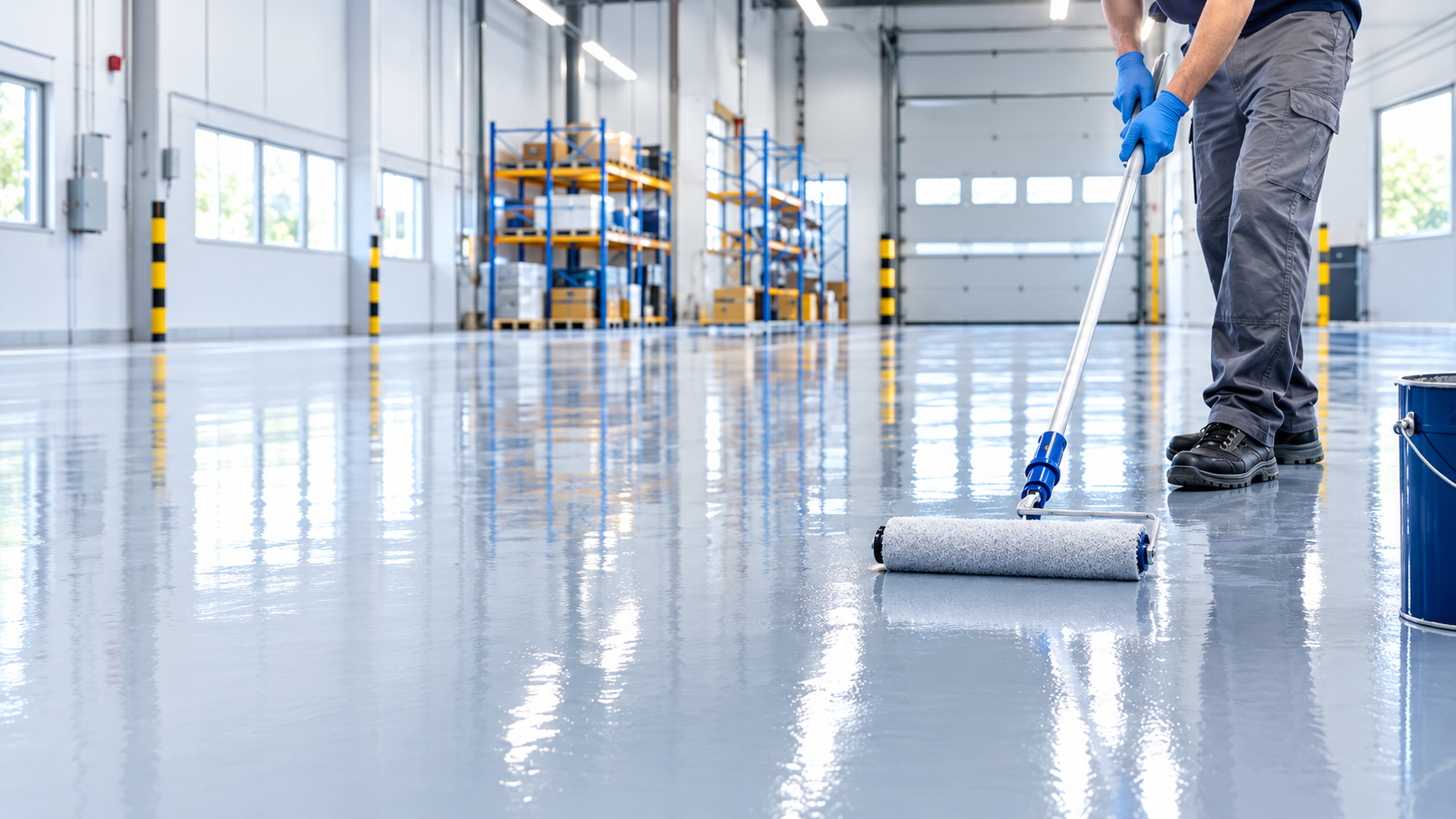
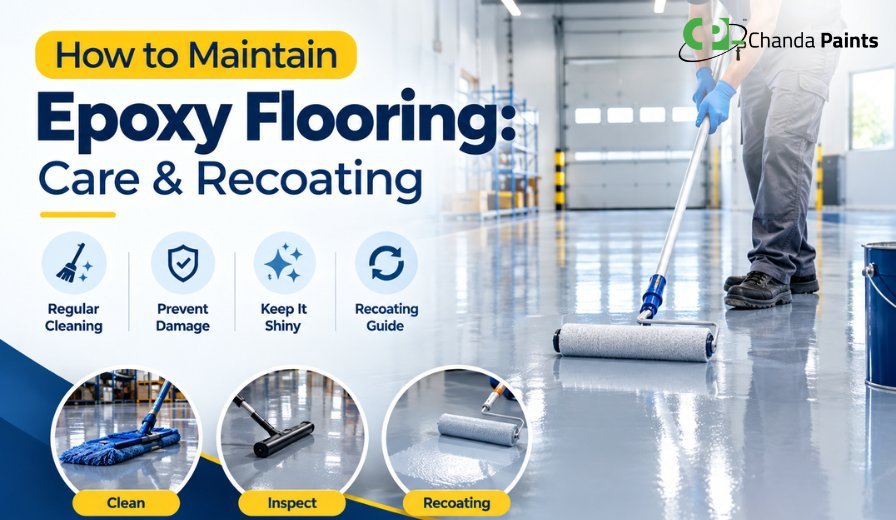
You may apply a good-quality epoxy paint, ensuring proper surface preparation and application procedures. But poor maintenance can affect workplace safety, cleaning efficiency and the service life of the coating.
This can be avoided with proper epoxy floor maintenance. Learn how to maintain epoxy flooring with proper cleaning, daily care, damage prevention, and recoating tips for industrial floors.
Let’s understand how to maintain epoxy flooring in warehouses, factories, workshops, and other demanding environments, including how to clean it correctly.
Why Epoxy Floor Maintenance Matters in Industrial Facilities
Epoxy floor finishes are designed to create a durable, relatively seamless coating that can withstand the rigors of various industrial processes. Yet even the best formulation cannot cope with all the factors. The efficiency of the coating will depend on the operating environment, initial installation, chemicals used, and post-installation maintenance.
A planned maintenance routine helps facility teams identify these issues early rather than waiting for visible coating failure.
It helps industrial facility owners avoid common mistakes like treating every epoxy floor with the same cleaning product and approach.
How to Maintain Epoxy Flooring
The best way to maintain epoxy flooring is by tailoring the care program according to how the floor is being used. Daily housekeeping takes care of loose contaminants, cleaning deals with the buildup of dirt, and inspections can help detect any damage.
-
Remove Dust and Loose Debris Regularlyṣ
Dust, sand, metal bits, and any kind of loose dirt can easily accumulate in industries and warehouses. As the forklifts and pallet trucks travel on top of this loose dirt, it may cause abrasion on the floor.
Utilize a broom with soft bristles, a dust mop, or an appropriate industrial vacuum cleaner to clear loose particles. Take special care while cleaning loading docks, machinery areas, storage aisles, and entryways where particles accumulate.
-
Use a Suitable Cleaning Solution
For cleaning an epoxy floor surface, it is best to use a cleaner approved by either the manufacturer or one that is neutral in nature. You should not automatically assume that a more potent chemical would give better results.
The cleaning agent should be tested to determine its compatibility with the existing coating before the cleaning process is initiated throughout the plant.
-
Clean Spills Without Delay
Oil, grease, process fluids, and chemical spills should be dealt with according to the site-approved spill response method. Although the epoxy coating provides resistance to chemicals, this resistance is dependent on the specific chemical substance, its concentration, temperature, and time of exposure.
First, segregate the hazardous area if there is any slip or exposure risk associated with the spill. Then, a suitable method should be used to clean the spill based on its nature.
-
Rinse and Remove Residue Properly
Just because there is no dirt on the surface doesn’t mean that cleaning is finished. Residue of detergents, oily residue, or contaminated washing water may make the surface slippery or spotted after drying.
If there is a requirement for rinsing in the cleaning process, ensure you use clear water and dry it off using an appropriate squeegee or wet vacuum cleaner. Ensure that the flooring is ready for walking or driving before reopening it.
-
Choose the Right Cleaning Equipment
The cleaning equipment should suit both the floor area and the type of contamination. A microfiber mop may be sufficient for a small workshop, while a large warehouse may benefit from an appropriately configured automatic floor scrubber.
For larger industries, mechanical cleaning improves consistency and saves labor. But the machine settings, chemicals, and brush or pad must be verified by the coating manufacturer before starting any process.
How to Clean an Epoxy Floor in a Warehouse
Every warehouse floor has unique problems, like forklift traffic, rubber tire marks, packaging materials, dust, moving pallets, and occasional oil and hydraulic leaks. When creating an epoxy floor cleaning guide for a warehouse, consider not only the dirt itself but also how traffic will affect it.
A practical warehouse cleaning routine should follow:
- Daily cleaning of packaging debris and loose dust, checking loading areas, forklift routes and frequently used aisles for contamination or slip hazards.
- Use suitable cleaning equipment to remove accumulated grime, tyre marks, and residue.
- Examine turning points, loading bays, equipment routes, and areas exposed to chemicals.
Epoxy Floor Care Tips to Prevent Premature Damage
Cleaning will help maintain the surface; however, maintenance also involves the regulation of factors that damage the surface to begin with.
✔ Swipe the floor and remove tiny debris regularly.
✔ Clean by mixing warm water with floor cleaner or a dedicated pH-neutral cleaner.
✔ Try avoiding harsh chemicals like acids, ammonia or bleach for regular cleansing.
✔ Avoid steam mops or boiling water (above 140°F) as this may compromise the adhesive bond.
✔ Place pad under heavy machinery or furniture.
✔ Inspect the surface annually & consider applying a fresh topcoat every few years.
When to Recoat Epoxy Flooring?
Perhaps one of the most frequently asked maintenance queries would be related to recoating the epoxy floor. The simple fact of the matter is that the answer would not solely depend on the calendar date. It would be based on a number of factors.
Look for the following warning signs:
- Persistent dullness or surface wear: The finish looks increasingly worn in high-traffic zones, even after proper cleaning.
- Scratches or localised coating loss: Repeated abrasion has damaged the surface or exposed the underlying layer.
- Peeling or flaking: The coating is separating from the substrate or from an underlying coating layer.
- Blisters or bubbles: Possible signs of moisture-related pressure, contamination, or adhesion problems.
- Cracks or damaged patches: These may involve the coating, the concrete substrate, or both.
- Recurring staining or chemical damage: The surface may be experiencing exposure beyond the coating's capabilities.
Epoxy Floor Recoating Guide
Step 1: Inspect the Existing Floor
Start by looking at the extent of wear, the condition of the concrete, the quality of the bonding of the coating that already exists and whether there are signs of dampness or chemicals.
Step 2: Identify and Resolve the Root Cause
In cases where the coating has failed as a result of moisture, contamination, poor adhesion, or inappropriate coating specification, this problem needs to be sorted out before going ahead with the new coat.
Step 3: Prepare the Surface Correctly
The surface needs to be clean and well-prepared for the type of coating system chosen. Based on the coating system that currently exists and its condition, preparation could entail degreasing, mechanical abrasion, cleaning off loose material, spot repairing, and dusting.
Step 4: Confirm Compatibility and Apply the Coating
This coating has to be compatible with the present system and work well in the environment of the facility. In some cases, depending on the product, it can mean the need for a primer, tie coat, specific surface roughness, or removal of the old coating.
Step 5: Establish a Maintenance Plan After Recoating
Once the floor is operational again, develop appropriate procedures for its cleaning, inspection, and spill cleanup. Document the type of coating system, the date of installation, past repairs done to it, and any restrictions on chemical exposure and cleaning equipment.
Get the Best Industrial Epoxy Floor Maintenance Guidance
Long-term epoxy floor performance depends on more than the coating applied during installation. Cleaning practices, chemical exposure, traffic conditions, surface preparation, and timely repairs all influence how well the floor performs over time.
Chanda Paints helps you with industrial coating selection through application guidance. As an industrial coatings manufacturer, we help you understand suitable coating options and provide application guidance for your flooring requirements.
Contact us today to discuss your industrial epoxy floor coating requirements and get guidance on selecting a suitable coating system for your facility.
Frequently Asked Questions (FAQs)
How often should epoxy flooring be cleaned?
Epoxy flooring should be swept or dust-mopped regularly and wet-cleaned as needed based on traffic and contamination. High-traffic industrial areas may require daily cleaning, while deeper cleaning can be scheduled periodically.
What is the best cleaner for epoxy floors?
A mild, non-abrasive cleaner or manufacturer-approved detergent is generally suitable for routine epoxy floor cleaning. Always check the coating manufacturer's recommendations, as some cleaners can affect the floor's colour, gloss, or texture.
Can I use bleach on epoxy flooring?
Bleach should not be used routinely unless the specific epoxy system is confirmed to be compatible with it. Chemical resistance varies between coating formulations, so check the product's technical documentation before use.
How do I remove oil stains from an epoxy floor?
Clean oil spills as soon as possible using a compatible cleaner or degreaser, followed by thorough rinsing and removal of the cleaning residue. For heavy contamination, use a cleaning method recommended for the specific coating system.
How do I remove tyre marks from epoxy flooring?
Use a compatible cleaner or degreaser with a suitable soft or non-abrasive brush or pad. Avoid aggressive scrubbing that could damage the coating, and address recurring tyre marks by reviewing forklift operation and traffic patterns.
Can I recoat an existing epoxy floor?
Yes, an existing epoxy floor can often be recoated if the substrate and existing coating are sound and compatible with the new system. Proper cleaning, adhesion assessment, and surface preparation are essential before recoating.
How long should I wait before recoating epoxy flooring?
There is no universal recoating time because it depends on the specific epoxy system, application conditions, and manufacturer's recoat window. Always follow the product's technical data sheet rather than relying on a fixed number of days.
What causes epoxy floors to become dull?
Dust, abrasive dirt, heavy traffic, improper cleaning products, chemical exposure, and surface wear can reduce an epoxy floor's gloss. Regular cleaning and appropriate maintenance can help preserve its appearance and service life.
How long does epoxy flooring last with proper maintenance?
A properly specified, installed, and maintained epoxy flooring system can provide years of service. Its actual lifespan depends on traffic, abrasion, chemical exposure, substrate condition, coating thickness, installation quality, and maintenance practices.
When should epoxy flooring be replaced instead of recoated?
Replacement or extensive refurbishment may be necessary when the existing coating has widespread delamination, severe deterioration, major substrate problems, or repeated failures that cannot be resolved through preparation and recoating. A technical assessment should be carried out before deciding between repair, recoating, or replacement.