
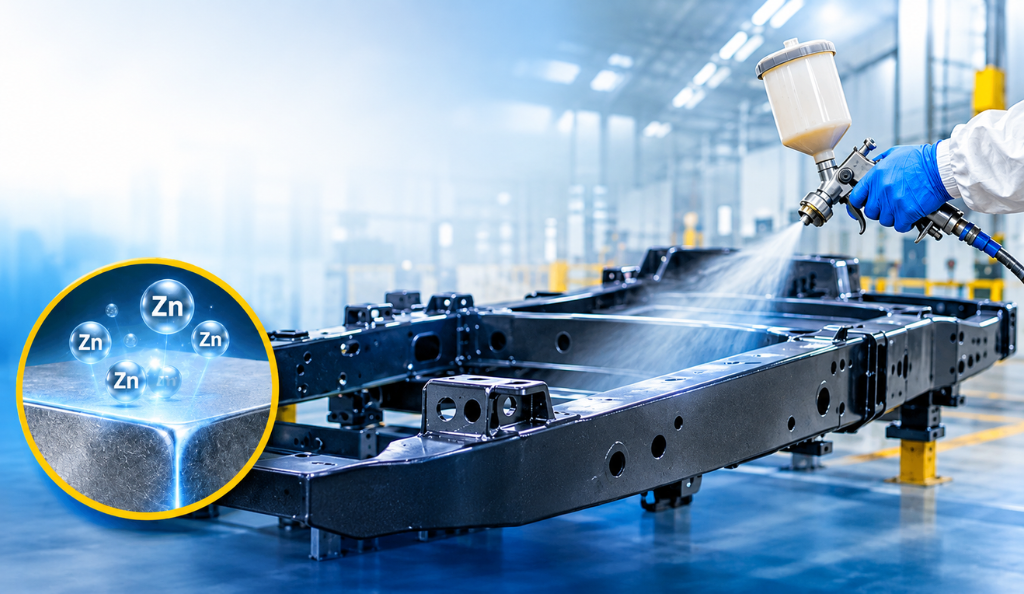
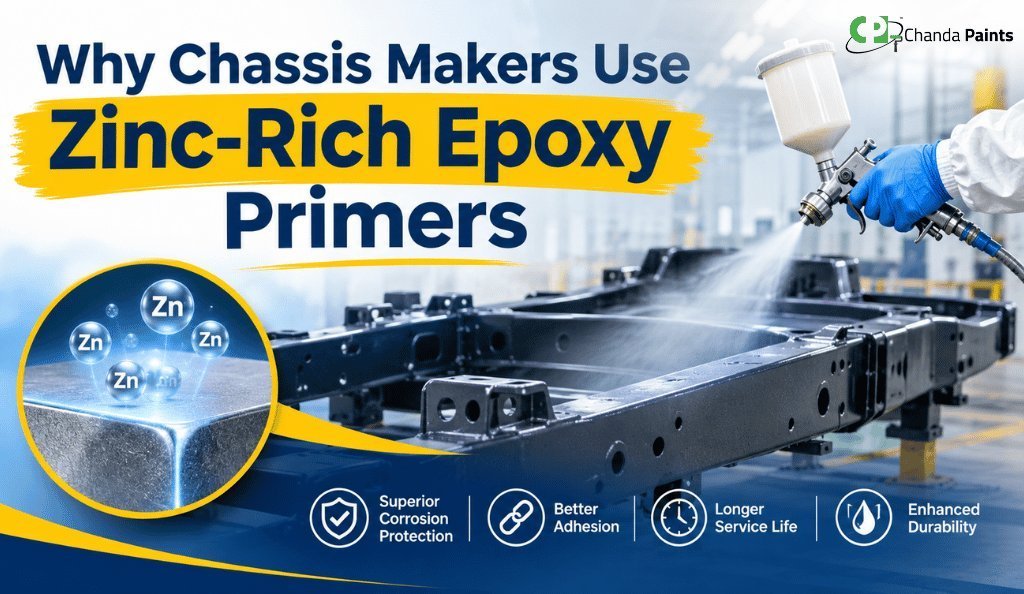
A vehicle chassis can look perfectly sound on the outside while corrosion may quietly develop underneath.
Continuous exposure to rainwater, road grime, moisture, mud and changing environmental conditions can gradually weaken unprotected steel components.
This is why selecting the right protective coating matters from the manufacturing stage itself. Among the available industrial coating solutions, zinc rich epoxy primer has become an important choice for protecting steel chassis against corrosion.
But what makes this primer different from conventional anti-rust coatings, and why do chassis manufacturers consider it for long-term steel protection?
Why Is Chassis Corrosion Such a Serious Concern?
A vehicle chassis is constantly exposed to conditions that encourage corrosion. Unlike exterior body panels, many chassis components operate close to the road, where they encounter water splashes, accumulated dirt, abrasive particles and environmental contaminants.
In the Indian climate with heavy monsoon exposure or high humidity, moisture can remain trapped around joints, welded sections and overlapping metal surfaces. Over time, these conditions can encourage rust formation, particularly where the original protective coating is damaged.
Simply applying a conventional paint layer may not provide the level of protection required for these applications.
What Makes Zinc Rich Epoxy Primer for Chassis Different?
A zinc-rich epoxy primer is an industrial anti-corrosion coating formulated using zinc dust pigments dispersed in an epoxy resin system.
What makes it different is that it does more than create a physical barrier between steel and its surroundings. It can also provide cathodic, or sacrificial, protection.
How Does Epoxy Zinc Rich Primer Work?
Zinc is more electrochemically active than iron. When metallic zinc particles are in sufficient electrical contact with the steel substrate, zinc preferentially corrodes instead of the underlying steel.
In simple terms, the zinc sacrifices itself to protect the metal beneath it.
This mechanism is particularly valuable in applications where steel may experience coating damage or localised exposure.
The epoxy resin also helps bind the coating to the prepared steel surface, contributing to adhesion and barrier protection.
This combination of sacrificial and barrier protection is one of the primary reasons zinc-rich coating manufacturers specify these systems for demanding industrial steel applications.
5 Reasons Chassis Makers Use Zinc Rich Primer for Rust Protection
Choosing a primer for chassis manufacturing involves more than finding a coating that prevents visible rust. Here are five reasons why epoxy zinc rich primer is considered for these applications.
Zinc Rich Epoxy Primer Benefits
-
Active Protection Against Steel Corrosion
When the zinc particles are sufficiently connected within the coating film and to the steel substrate, they help protect exposed steel through galvanic action. This makes zinc-rich epoxy primers particularly useful for carbon steel components that face recurring moisture exposure.
For chassis manufacturers, this additional protection can be valuable in reducing the risk of premature corrosion.
-
Strong Adhesion to Properly Prepared Steel
Epoxy-based primers are known for their adhesion properties when applied to properly prepared steel. This helps establish a stable foundation for subsequent coating layers.
But in this case, proper surface preparation is required. Depending on the product specification, abrasive blast cleaning to Sa 2½ may be recommended.
-
Better Resistance in Demanding Operating Environments
A suitable zinc-rich epoxy primer helps protect steel against corrosion under these conditions. When incorporated into a compatible multi-coat system, it can contribute to more dependable protection in demanding industrial and transportation environments.
-
A Durable Foundation for Multi-Coat Protection
Zinc-rich primers provide sacrificial protection, while subsequent layers contribute additional barrier protection and resistance to environmental exposure.
This layered approach allows manufacturers to select a coating system based on the chassis material, operating environment and expected service requirements.
-
Supports Long-Term Maintenance Planning
Using an appropriately specified anti corrosion primer for chassis applications helps manufacturers address corrosion risks during production rather than relying entirely on repairs after rust becomes visible.
Why Is Zinc Rich Anti Corrosion Primer for Chassis Better Than Conventional Anti-Rust Primer?
Not all anti-rust primers protect steel in the same way. Conventional primers generally depend on barrier protection, inhibitive pigments or a combination of mechanisms to reduce corrosion.
But an epoxy zinc-rich primer adds another mechanism: sacrificial protection through metallic zinc.
|
Parameters |
Conventional Anti-Rust Primer |
Zinc Rich Epoxy Primer |
|
Primary protection |
Barrier or inhibitive protection |
Sacrificial and barrier protection |
|
Zinc content |
Depends on formulation |
High metallic zinc loading |
|
Corrosion protection |
Depends on primer chemistry |
Cathodic protection when properly formulated |
|
Steel adhesion |
Depends on resin and surface preparation |
Epoxy-based adhesion to prepared steel |
|
Typical application |
General metal protection |
Demanding steel corrosion protection |
|
Coating system |
Depends on product |
Commonly used with compatible intermediate and topcoats |
Where Else Can Zinc Rich Industrial Anti Rust Primer Be Used?
Although chassis protection is an important application, high quality zinc-rich epoxy primers are also used across several industrial sectors where steel corrosion is a concern. Common applications include:
- Heavy commercial vehicle and automotive steel components.
- Industrial machinery and equipment.
- Structural steel frameworks.
- Fabricated steel assemblies.
- Industrial plants and infrastructure.
- Steel structures exposed to demanding atmospheric conditions.
However, you must consult with coating professionals about the primer suitability before choosing a specific system.
Choose The Right Chassis Rust Protection Coating
Selecting an industrial anti-rust primer should begin with understanding the actual conditions the chassis will encounter.
A manufacturer operating in a humid coastal region may have different corrosion protection requirements from one producing vehicles for predominantly dry inland environments. Similarly, a heavy-duty commercial vehicle may require a different coating specification from a light-duty fabricated assembly.
Discuss your coating requirements with experts at Chanda Paints. We can build custom solutions based on your specific industrial needs.
Connect with us today!
Frequently Asked Questions (FAQs)
What is a zinc-rich epoxy primer?
A zinc-rich epoxy primer is an industrial protective coating containing a high concentration of metallic zinc particles in an epoxy resin system. It protects steel through sacrificial (cathodic) action and barrier protection.
Why is zinc-rich epoxy primer used for chassis?
It is used on steel chassis to provide corrosion protection against moisture, road contaminants and harsh environmental exposure. Its sacrificial zinc protection helps reduce the risk of rust and supports longer-lasting steel protection.
How does zinc-rich epoxy primer prevent rust?
It contains metallic zinc particles that corrode preferentially to steel, providing sacrificial protection when sufficient electrical contact exists. The epoxy binder also creates a protective coating layer that helps limit exposure to moisture and other corrosive elements.
Is zinc-rich epoxy primer better than a normal primer?
For demanding steel corrosion protection, zinc-rich epoxy primers can offer an advantage over conventional primers because they provide sacrificial protection in addition to barrier protection. However, the best choice depends on the substrate, exposure conditions and coating requirements.
Can zinc-rich epoxy primer be used on automobile chassis?
Yes, it can be used on properly prepared steel automobile chassis, provided the primer is specifically formulated and approved for the application. The complete coating system should also meet the vehicle's corrosion resistance and durability requirements.
What surface preparation is required before applying zinc-rich epoxy primer?
The steel surface should be free from rust, oil, grease, dust, mill scale and other contaminants. Abrasive blast cleaning to Sa 2½ is commonly recommended, subject to the manufacturer's technical data sheet.
How should zinc-rich epoxy primer be applied?
The primer should be mixed according to the manufacturer's instructions and applied using the recommended method, such as airless spray, conventional spray or brush application where permitted. Surface conditions, pot life, application thickness and curing requirements must be properly controlled.
Can a topcoat be applied over zinc-rich epoxy primer?
Yes, a compatible intermediate coat and topcoat can be applied to improve barrier protection and overall coating durability. The recommended recoat interval and compatibility requirements should be checked in the product's technical data sheet.
How long does zinc-rich epoxy primer protect against corrosion?
Its corrosion protection depends on zinc content, coating thickness, surface preparation, application quality and environmental exposure. When used as part of a properly designed coating system, it can provide long-term protection, but no fixed service life applies to every application.
Which industries use zinc-rich epoxy primers?
Zinc-rich epoxy primers are commonly used in automotive, transportation, construction, infrastructure, heavy engineering and industrial manufacturing. They are particularly useful for protecting steel structures, machinery, fabricated components and vehicle chassis against corrosion.