
Did you know that a factory floor fails quietly before it collapses completely? First, you notice stains that won’t go away. Then cracks start spreading, and within months, operations begin to slow down because the floor simply can’t handle the load anymore.
This is where you, as a business owner, might make a costly mistake. No, it is not because you chose the wrong flooring system. It is because you chose the wrong TYPE of epoxy floor coating for your specific industrial needs.
And that decision? It directly affects durability, safety, maintenance costs, and even productivity.
Let’s break this down the right way.
Who This Guide Is For
But before jumping straight away, let’s understand who this guide is actually for. This guide is written for factory owners, warehouse managers, contractors, and facility decision-makers in India who are actively evaluating or planning an industrial epoxy floor coating solution.
Now check out why epoxy floor coating is the go-to choice for most industrial floors in the section, and then we will discuss ahead:
Why Epoxy Floor Coating Is the Go-To Choice for Industrial Floors
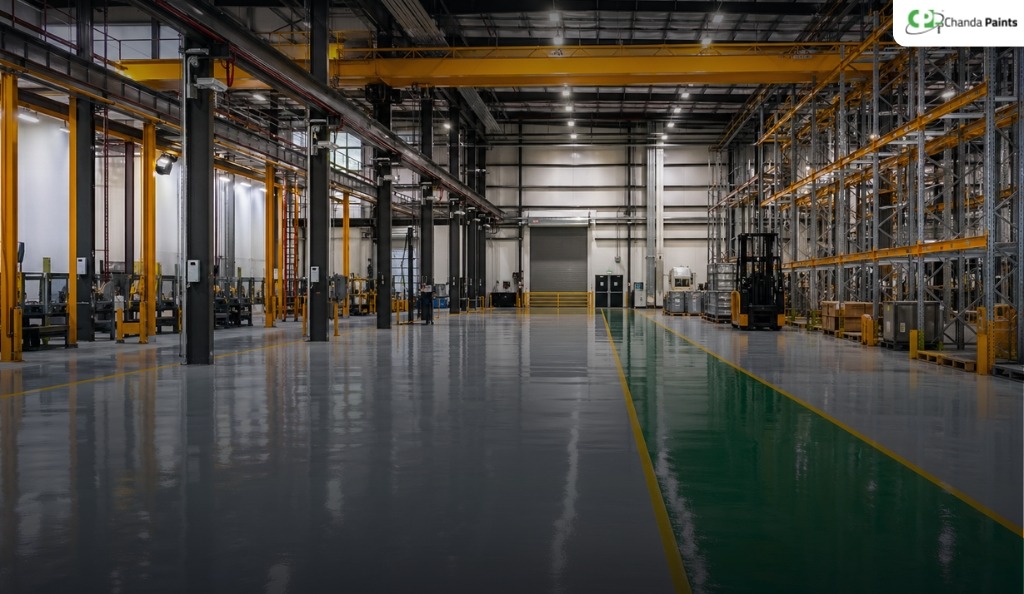
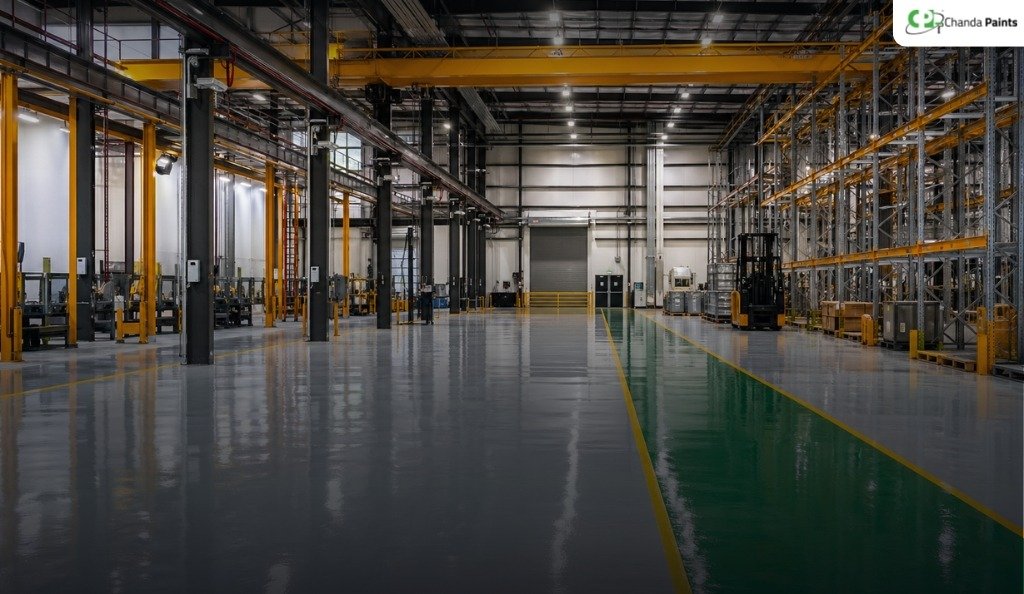
Walk into any modern warehouse or manufacturing unit, and you will notice one thing: smooth, glossy, seamless floors that look built to last.
That’s not just aesthetics. A properly applied epoxy floor coating in India is designed to handle heavy machinery, chemical spills, and constant foot traffic without breaking down.
But here’s the catch. Not all epoxy coatings are created equal, and choosing blindly often leads to premature failure.
How to Choose the Right Epoxy Floor Coating
Step 1: Understand Your Industry Requirements First
Before comparing products, you need clarity on your floor’s daily reality.
A pharmaceutical unit has very different requirements compared to a logistics warehouse. While the former demands hygiene and chemical resistance, the latter prioritizes load-bearing strength and abrasion resistance.
If your floor handles forklifts daily, you need a high-build system. If chemicals are involved, resistance becomes non-negotiable.
Means choosing without this clarity is like buying machinery without knowing production capacity.
Step 2: Know the Types of Industrial Epoxy Floor Coating
This is where most decision-makers get overwhelmed. Let’s simplify it.
Self-Leveling Epoxy
Ideal for smooth, seamless surfaces where hygiene matters. Common in food processing or healthcare environments.
Epoxy Mortar Systems
This is the toughest option available. It’s built for heavy-duty industrial floors where impact resistance is critical.
Anti-Slip Epoxy Coating
Perfect for areas exposed to water, oil, or chemicals. Safety becomes the priority here.
Each type serves a different purpose. But remember that the wrong choice doesn’t fail immediately. It fails when your operations demand more.
Step 3: Evaluate the Epoxy Floor Coating Process
Most people focus only on the final finish. Smart buyers focus on the process.
A strong epoxy floor coating process includes surface preparation, crack repair, priming, coating, and curing. Skipping or rushing any step drastically reduces lifespan.
A contractor offering a quick job is often cutting corners where it matters most, surface preparation. And that’s exactly where failures begin.
Step 4: Understand the Real Cost (Not Just the Price)
Let’s address the question everyone asks: What is the epoxy floor coating cost?
In India, pricing varies depending on thickness, type, and surface condition. But the real cost isn’t what you pay upfront. It’s what you spend over time.
In fact, a cheaper coating that fails in two years will always cost more than a premium system lasting ten years.
Smart businesses never ask, “What’s the cheapest option?” They ask, “What gives the best long-term value?”
Step 5: Choose the Right Application Partner
Searching for epoxy floor coating services near me might give you dozens of options. But here’s the truth, not all applicators understand industrial demands.
A good manufacturer understands your site operations, suggests the right coating solution, and explains limitations for application clearly. A bad one simply agrees with whatever you ask.
And in industry floors, agreement without expertise is expensive.
Step 6: Don’t Ignore Versatility (Industrial vs Residential)
Interestingly, many people also explore the best epoxy floor coating for home, especially for garages or modern interiors.
While residential systems look similar, industrial coatings are far more robust. Trying to use a residential-grade coating in an industrial space is a mistake that shows up quickly.
Different use cases demand different formulations. There’s no one-size-fits-all here.
What Most Competitors Won’t Tell You
Here’s something you won’t hear from most industrial paint and coating suppliers.
The lifespan of your epoxy floor depends more on surface preparation than the coating itself.
Yes, the product matters. But if the substrate isn’t prepared correctly based on the moisture levels, cracks, and contamination, no premium coating will save it.
Another overlooked factor is downtime planning. Most of the time, you rush installation without aligning it with operational schedules, leading to improper curing and early wear.
If you get these two things right, you are already ahead of 80% of buyers in the market.
Final Thoughts
Choosing the right epoxy floor coating isn’t about picking a product from a catalog. It’s about understanding your operations, evaluating long-term impact, and working with the right experts.
A well-executed epoxy floor doesn’t just protect your surface. It improves efficiency, safety, and overall operational flow.
Chanda Paints has been serving in the industrial paint and coating industry for over 80 years, and one thing that we have understood clearly is that even one wrong batch can lead to costly repairs within years. So, book a free consultation with our experts today and get custom floor costing for your unique industrial needs.