
Fire safety is an essential part of maintaining a safe and responsible industrial workplace. In a manufacturing environment, knowing how to respond quickly and correctly during a fire emergency can help protect people, minimize risks, and prevent further damage.
Keeping this responsibility in focus, Chanda Paints conducted a Fire Training Programme for all staff and workmen at its Kalyani factory on 27th August 2026 at around 1 PM. The training was organized to educate employees, workmen and other personnel about the appropriate steps to take in the event of a fire emergency.
Fire Safety Training at Chanda Paints
The programme brought together staff, workmen, and security guards, along with honorable Mr. Pijush Kanti Das, Ex-Officer of the West Bengal Fire Service Department, and representatives from Kanika Enterprises.
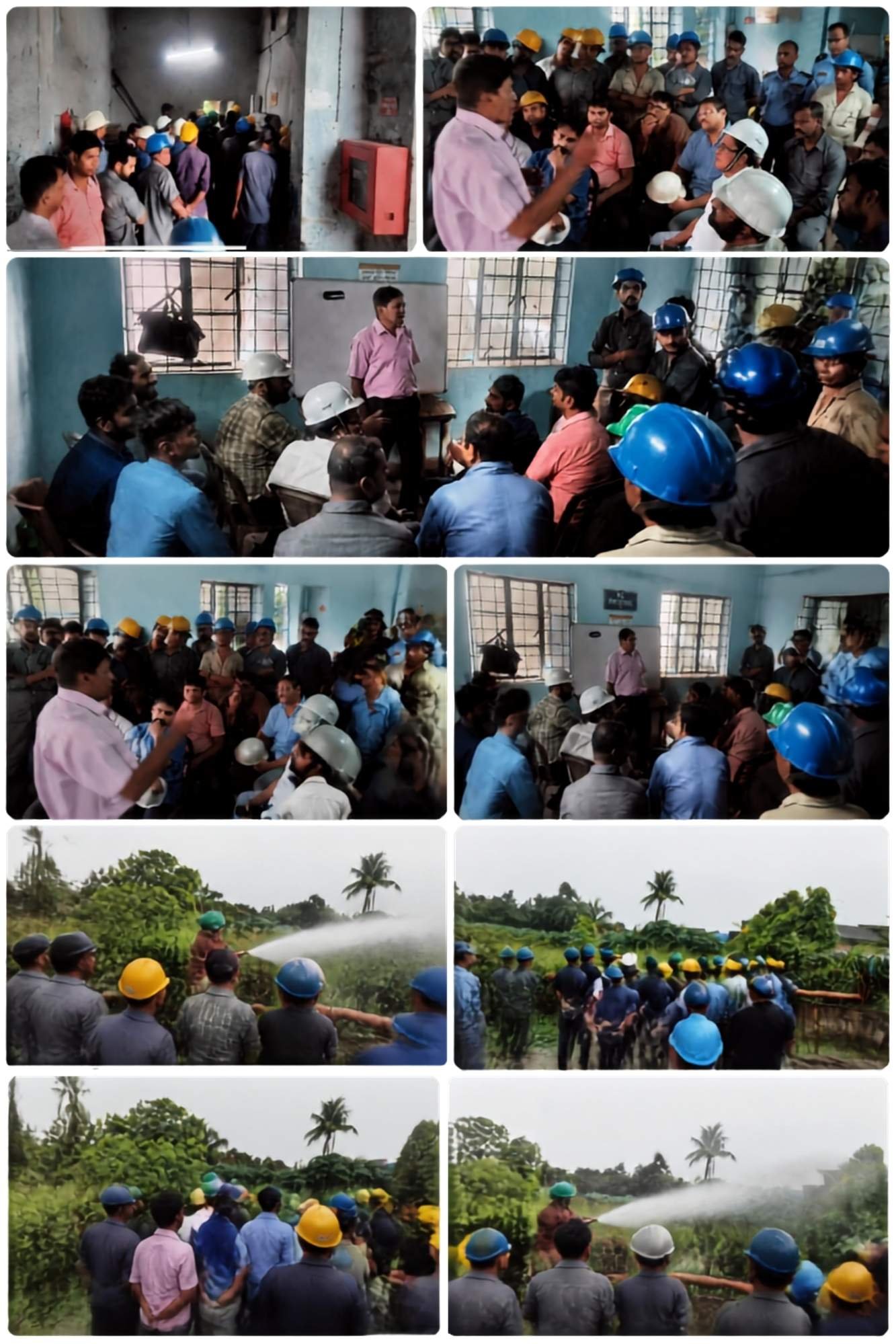
The session was divided into two important parts: theory and practical training, so that participants could understand both the principles of fire safety and their practical application.
Understanding the Right Response During a Fire Emergency
During the theory session, Mr. Pijush Kanti Das explained the importance of acting quickly but safely when a fire breaks out.
One of the first steps highlighted during the training was the need to activate the fire alarm immediately. This helps alert everyone inside the factory and enables employees to move towards the designated Assembly Point through the available exit routes, where the headcount can be conducted.
The training also emphasized a fundamental principle of emergency response: personal safety must come first. Employees should protect themselves before considering the protection of property or equipment.
Our participants were also introduced to different types of fires and learned how the nature of a fire determines the appropriate response. The session covered the identification of various types of fire, the correct use of fire extinguishers, and the operation of fire hydrants.
The theory session continued for approximately one hour.
From Theory to Practical Demonstration
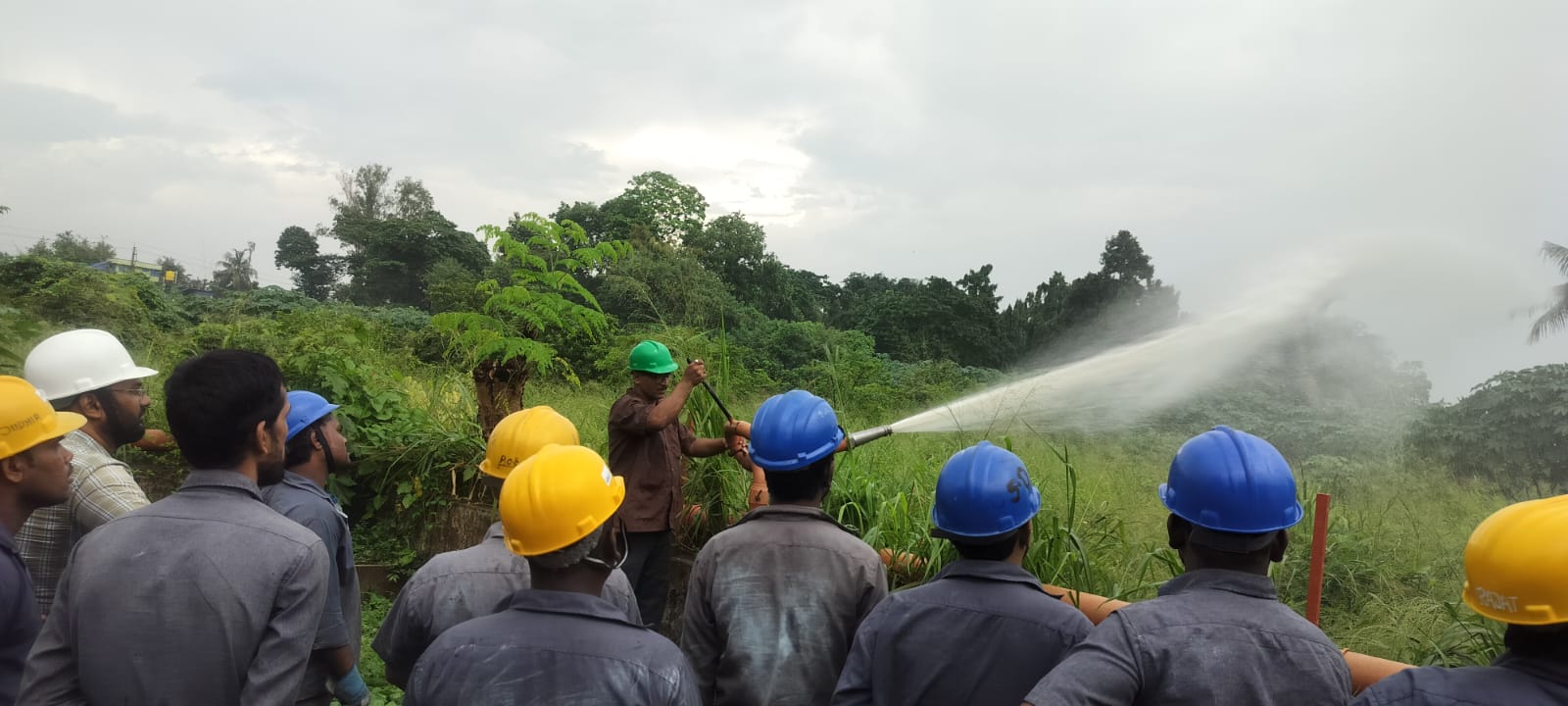
Following the classroom session, the training moved to a practical demonstration at the factory premises.
Mr. Das organized the participants into groups and demonstrated the different types of fire extinguishers installed at various locations within the factory. Participants were carefully guided on how and when these extinguishers should be used during a fire emergency.
The practical training also included demonstrations of fire hydrant operation. Our workmen were allowed to operate the hydrants themselves under Mr. Das's guidance, helping them gain hands-on familiarity with the equipment that may be required during an emergency.
This practical approach reinforced an important aspect of fire preparedness: knowing where emergency equipment is located is not enough. They should also understand how to operate it correctly when required.
The Importance of Headcount During Emergency Response
Another important aspect discussed during the training was accountability after evacuation and firefighting efforts.
Once a fire has been brought under control, all personnel must be accounted for. If someone is found missing, appropriate measures must be taken to locate and evacuate the person safely.
This makes a proper headcount at the Assembly Point an important part of the overall emergency response process.
The practical session continued for more than an hour, allowing participants to understand and practice the procedures explained during the theory session.
Building a Safer Industrial Workplace for Our Team
Fire emergencies can develop rapidly, making preparation and awareness critical in industrial workplaces. We strongly believe that regulatory training will help our employees understand emergency procedures before an actual incident occurs, reducing confusion and enabling a more coordinated response.
The Fire Training Programme at Chanda Paints reflects the importance the organization places on workplace safety, emergency preparedness, and employee awareness. By combining professional guidance with hands-on demonstrations, the initiative truly helped all our staff, workmen, and security personnel strengthen their understanding of fire safety procedures.
Because at Chanda Paints, safety is not limited to having emergency equipment in place. It also involves ensuring that the people working within the organization know how to respond when it matters most