
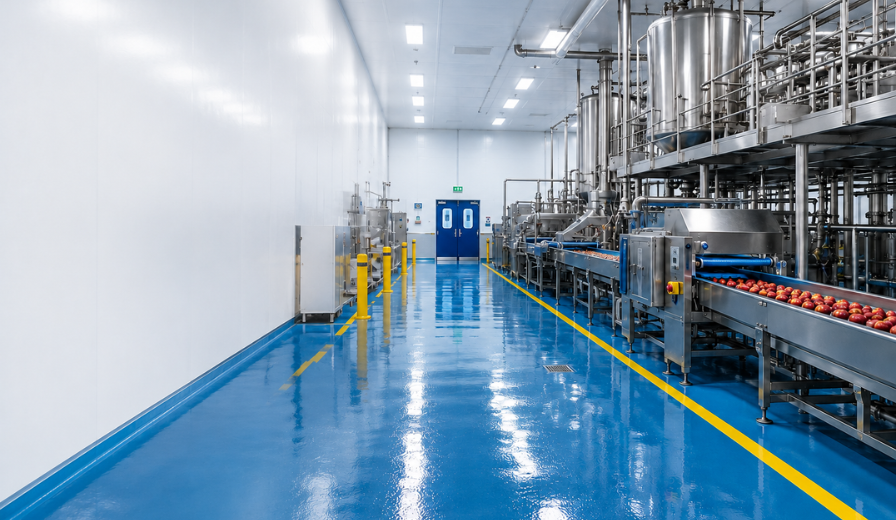
Food processing plants can have the most advanced machinery, strict quality, and even highly trained staff. But if the floors, walls, and equipment protective layer start to crack or peel, it starts with something small.
Paint peeling or protection failure can create a perfect environment for bacteria, mold, and contamination. Over time, maintaining hygiene becomes harder, maintenance costs increase, and compliance inspections become stressful.
That is exactly why choosing the right food grade industrial coating is essential. It not only protects food processing plants but also protects products, ensuring food safety & extending infrastructure lifetime.
Read the full guide to understand which coatings work best and how you can avoid costly mistakes while choosing an industrial coating for your food processing plants.
Why Food Processing Plants Need Specialized Industrial Coatings
Unlike conventional factories, food processing factories operate under extremely demanding conditions. Because the floor and walls are constantly exposed to water, oils, food spills, cleansing chemicals, thermal shocks, and heavy foot traffic.
Standard industrial paints & coatings simply aren’t engineered for these specific environments.
This is a major reason why a professionally designed food processing plant coating creates a seamless protective barrier that prevents moisture penetration & minimizes bacterial growth.
What Makes a Food Grade Industrial Coating Different?
Not every industrial coating qualifies for food processing environments.
A genuine food grade industrial coating is formulated to maintain hygiene while providing exceptional durability. It is not just about the protection of concrete; it actually helps the cause of sanitation by providing surfaces that are smooth and impervious to microbes.
Some of the significant properties of food-grade coatings are:
✔ Seamless, non-porous finish
✔ Chemical resistance against sanitizers and detergents
✔ Moisture and water resistance
✔ Abrasion and impact resistance
✔ Slip-resistant finish where required
✔ Easy cleaning and maintenance
✔ Long service life with minimal repairs
Best Types of Coatings for Food Processing Plants
-
Food Grade Epoxy Floor Coating
Among all the industrial coatings available, food grade epoxy floor coating remains one of the most trusted choices for Indian food manufacturing facilities.
The epoxy creates a strong barrier against water, oil, and contamination getting to the concrete beneath it. Moreover, it is tough enough to resist the wear and tear caused by the forklifts, pallets, and machinery within the facility.
In every kind of facility, whether food manufacturing units, beverage factories, packaging facilities, dairy plants, kitchens, or cold storage facilities, there is food-safe epoxy coating that works well everywhere.
-
Polyurethane Hygienic Floor Coating for Food Processing Plants
Polyurethane coatings are the best option for food plants that deal with high temperatures, have steam cleaning zones, and process meat or poultry.
This hygienic floor coating for food processing plants provides a seamless, smooth finish. The great thermal shock resistance makes this an ideal choice for production areas.
-
Polyurea Food Plant Coatings
If your food processing plant handles heavy traffic and loading docks, you need a polyurea coating. This is highly water-resistant, flexible to apply, and even virtually odor-free. Means you can apply this protective coating without interrupting your operational efficiency.
Also, polyurea coatings often feature antibacterial properties and can even meet strict sanitation standards.
-
Methyl Methacrylate (MMA) Food Processing Plant Coatings
Methyl Methacrylate (MMA) is mostly preferred for cold-storage rooms, freezers, and beverage facilities.
What makes this coating suitable for food plants is its exceptionally fast curing ability. Even at sub-freezing temperatures, this coating cures faster, bridging micro cracks, anti-slip, and being resilient.
Key Areas Where Protective Coatings Are Critical
Different areas inside a food processing facility face different challenges. Applying the same coating everywhere can rarely deliver the best results.
➜ Production Floors: Surfaces are exposed to consistent mechanical stress, food spills, chemical exposure & heavy cleaning. A high-performance epoxy floor coating offers the most long-lasting protection while maintaining hygiene.
➜ Walls & Processing Rooms: Smooth-coated walls resist moisture absorption & prevent peeling, making regular sanitization easier.
➜ Cold Storage: Rapid temperature fluctuations often damage ordinary paints. A specialized coating maintains adhesion even under extreme cold conditions.
Choosing the Right Food Processing Plant Coating
You should not select the right food grade industrial coating solely depending on price alone. Every food facility operates differently, so your protection should also be different.
Chanda Paints has been manufacturing custom industrial paints & coatings for food industries in India for more than 90 years. Whether you are constructing a new plant, upgrading an existing facility, or planning a maintenance shutdown, connect with us for the best food safe epoxy coating.
The right decision today can help prevent costly contamination risks tomorrow!
Frequently Asked Questions (FAQs)
What is a food grade industrial coating?
A food grade industrial coating is a specialized protective coating designed only for food processing environments. This coating forms a smooth, impermeable, and cleanable surface.
Which coating is best for food processing plants?
The right solution depends on the operations of your food processing plant. But food grade epoxy floor coatings are still one of the most common options out there. It provides outstanding durability, resistance to chemicals, hygiene, and long-term protection for floors under constant stress and cleaning.
Is epoxy coating safe for food processing facilities?
Absolutely, food-safe epoxy coating can be used in food-processing plants provided the coating system that is made specially for food industry use is utilized. Such a coating ensures the formation of a smooth and non-porous surface which can be easily sanitized.
What are the benefits of food grade epoxy floor coatings?
There are many benefits of food-grade epoxy flooring, such as hygiene, excellent resistance to chemicals and moisture protection, seamless finish, ease of maintenance, better durability, and lower costs for repairs in the long run.
How do I choose the right coating for a food processing plant?
You should select the right coating for your food processing plant based on the operating conditions of the facility, like chemical exposure, moisture, temperature variations, cleaning process, and mechanical stress. An expert coating consultant can assist you in selecting the coating system according to your requirements.
Are food grade industrial coatings resistant to chemicals and frequent washdowns?
Yes. Industrial coatings meant for food-grade applications have been developed with the ability to endure regular washing off and resist various types of chemicals used in food-processing facilities.
How long does a food grade epoxy coating last in a food processing plant?
The lifetime of a food-grade epoxy coating normally depends on the proper preparation of the surface before coating, professional installation and maintenance, and usually is around 8 to 15 years.
What industries require food grade industrial coatings?
Industrial coatings that are considered food-grade are normally found in dairy plants, soft drinks manufacturing units, meat and poultry processing plants, seafood processing plants, bakeries, commercial kitchens, refrigeration plants, pharmaceutical plants, and food packaging plants.
What factors should be considered before applying coatings in food processing facilities?
Preparation of the substrate before application. Then start by checking the substrate condition, moisture content, chemical attack, temperature changes, cleaning process, traffic, and hygienic requirements. Surface preparation and the selection of an appropriate coating system play a crucial role.
How often should food processing plant floors and walls be recoated?
No time frame can be set since it depends on usage, traffic, cleaning techniques, and environmental factors. A properly maintained industrial paint system usually lasts 8 to 15 years, but constant inspection enables detection of those parts that need recoating sooner than the expected period